
Most people walk out of a massage session feeling noticeably different. Lighter. Calmer. More present in their own body. But have you ever stopped to wonder exactly what is happening beneath the surface? What is your body actually doing in the hours and days after a professional massage session?
Understanding what happens to your body after a massage is genuinely useful knowledge. It helps you make sense of the sensations you experience afterward, both the deeply pleasant ones and the occasional surprising ones. Furthermore, it helps you understand why consistent, professional massage therapy produces results that go well beyond simple relaxation.
At Gulshan Thai SPA Center in Gulshan 2, Dhaka, we have delivered thousands of professional massage sessions to clients from Banani, Baridhara, Uttara, Dhanmondi, and all across the city. Our certified therapists work with a deep understanding of how the body responds to therapeutic touch. In this guide, we are sharing that knowledge with you, so that you walk into your next session informed and walk out knowing exactly why you feel the way you do.
What Happens to Your Body After a Massage: The First Few Hours
The effects of massage begin immediately and continue to unfold for hours after your session ends. In fact, for many clients, the most powerful changes happen not on the table but in the quiet hours that follow. Here is what is happening inside your body during that time.
Your Muscles Begin to Genuinely Release
During a professional massage, your therapist applies calibrated pressure to tight, overworked muscle tissue. This pressure physically works through adhesions and knots that have built up over days, weeks, or even months. As a result, in the hours following your session, those muscles continue to soften and release. The tension unwinds gradually rather than all at once.
This is why many clients feel a mild, pleasant heaviness in their muscles after a massage. Rather than fatigue in the negative sense, it is the physical sensation of tissue that has been held tightly for a long time finally letting go.
Your Circulation Has Significantly Improved
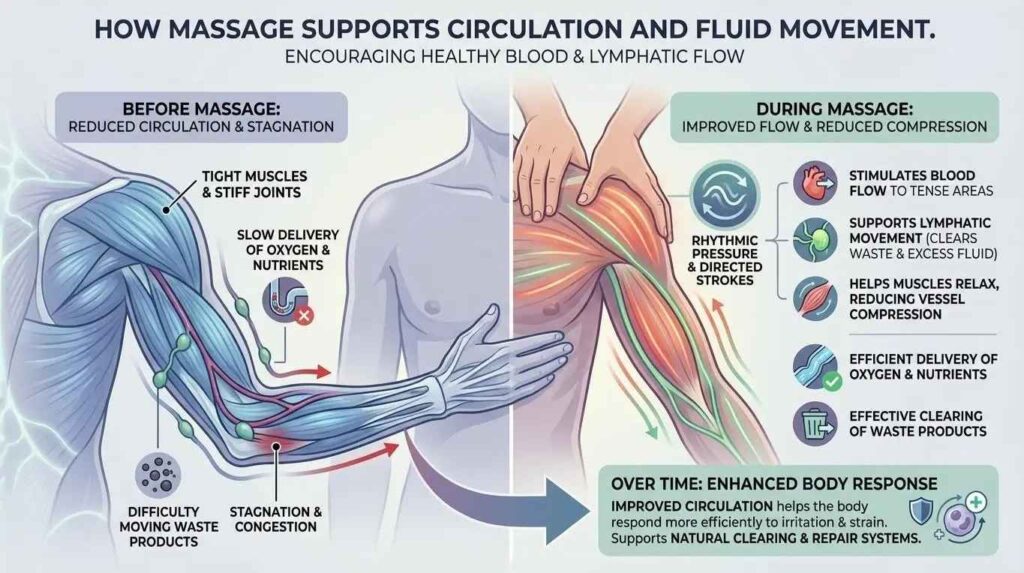
One of the most immediate and measurable things that happens to your body after a massage is improved blood circulation. The effleurage and petrissage strokes used during a professional session physically move blood through congested tissue. Stagnant, deoxygenated blood gets pushed out of tight muscle areas, and fresh, oxygen-rich blood flows in to replace it.
In the hours after your session, this improved circulation means that nutrients and oxygen reach your body more efficiently. Your muscles receive what they need to repair and recover. Organs function better, your skin looks and feels healthier, and your overall energy levels begin to shift noticeably upward.
Your Nervous System Shifts into Rest Mode
Perhaps the most significant thing that happens to your body after a massage is a fundamental shift in your nervous system. Specifically, therapeutic massage activates the parasympathetic nervous system, which is the branch responsible for rest, recovery, and digestion. In contrast, most of us spend the majority of our days in sympathetic dominance, which is the fight-or-flight state that keeps us alert, tense, and reactive.
When the parasympathetic system takes over after a massage, your heart rate slows, your breathing deepens, and your blood pressure drops slightly. Your body then redirects energy toward internal repair and restoration. This is not a passive side effect. Rather, it is one of the primary therapeutic mechanisms of professional massage, and it explains why the calm you feel after a session is so distinctly different from ordinary tiredness.
The Physical Benefits: What is Happening in Your Body
Understanding the physical dimension of what happens to your body after a massage gives you a much clearer picture of why this therapy produces such consistent results.
How Massage Reduces Muscle Tension
Muscle tension is rarely just a physical problem. It connects deeply to stress, posture, movement patterns, and accumulated physical demands. When a skilled therapist applies sustained pressure to a tense muscle, several physiological things happen simultaneously.
First, the muscle spindles, which are the sensory receptors within the muscle that regulate tone, receive a signal to reduce their firing rate. The muscle then physically relaxes in response. Second, the connective tissue surrounding the muscle, known as the fascia, softens and becomes more pliable under sustained therapeutic pressure. Third, blood flow to the area increases, bringing oxygen and nutrients that support cellular repair.
Together, these effects explain why a single professional session can produce such a dramatic and lasting reduction in muscular tension. Furthermore, with regular sessions, the baseline level of tension in your muscles gradually decreases over time.
The Role of Massage in Improving Circulation
Improved circulation is one of the most well-documented effects of therapeutic massage. The mechanical pressure of massage strokes dilates blood vessels, reduces vascular resistance, and enhances the movement of blood through the capillary network.
In practical terms, areas of the body that previously received poor blood supply, which are often the areas where pain and stiffness feel most acute, begin to receive proper nourishment. Over time, improved circulation also supports healthier skin tone, faster wound healing, more efficient digestion, and better overall organ function.
Massage and Its Effects on Pain Relief
One of the most important things that happens to your body after a massage is a measurable reduction in pain perception. Several mechanisms work together to produce this effect.
Endorphin release: Massage stimulates the release of endorphins, which are the body’s natural pain-relieving chemicals. These endorphins bind to receptors in the brain and spinal cord, reducing the intensity of pain signals before they reach conscious awareness.
Serotonin production: Massage also triggers increased serotonin production. Serotonin plays a direct role in pain modulation through the central nervous system, and adequate levels help the body manage pain signals far more effectively.
Addressing the root cause: Beyond neurochemistry, massage physically releases the muscle tension and fascia tightness that press on nerves and restrict movement. By addressing the mechanical source of pain rather than simply masking it, therapeutic massage delivers relief that lasts.
Enhancing Flexibility and Range of Motion
Tightness in muscles and connective tissue forms the primary physical barrier to full flexibility and range of motion. When muscle fibers shorten chronically through tension or inactivity, and when the surrounding fascia becomes dense and adhesive, movement grows restricted and uncomfortable.
Professional massage directly addresses both of these barriers. Petrissage techniques lengthen shortened muscle fibers, while sustained friction work softens dense fascia. Passive stretching techniques, particularly those drawn from traditional Thai massage, move joints through their full range of motion in a supported, therapeutic way. Clients consistently report improved movement freedom and reduced joint stiffness in the days following a professional session.
The Impact of Massage on Inflammation
Chronic low-grade inflammation underlies persistent pain, fatigue, and reduced physical performance in many people. Research in exercise physiology shows that therapeutic massage reduces the production of cytokines, which are proteins that drive the inflammatory response.
At the same time, massage stimulates mitochondria production in muscle cells, supporting faster cellular recovery. In other words, massage does not just address the symptoms of inflammation. At a cellular level, it intervenes in the process itself. For clients managing conditions driven by chronic inflammation, this represents a genuinely significant therapeutic benefit.
The Psychological and Emotional Effects After a Massage
What happens to your body after a massage extends well beyond the physical. The psychological and emotional changes are equally real, equally measurable, and for many clients, equally important.
Stress Reduction and Deep Relaxation
Stress is not just a mental state. It is a full-body physiological condition characterized by elevated cortisol, increased heart rate, elevated blood pressure, and heightened muscle tension throughout the body. When cortisol levels remain chronically elevated, the consequences affect everything from sleep quality to cardiovascular health to immune function.
Professional massage directly intervenes in this process. Cortisol levels drop measurably during and after a session. The parasympathetic nervous system becomes more active. Muscle tension reduces, which in turn reduces the physical feedback loops that sustain the stress response. The relaxation achieved after a professional massage is therefore not superficial. Rather, it represents a genuine and measurable shift in the body’s physiological state.
How Massage Improves Mood
The mood-lifting effects of therapeutic massage connect directly to neurochemistry. During and after a professional massage, the brain increases its production of serotonin and dopamine. Serotonin stabilizes mood and promotes emotional wellbeing, while dopamine supports motivation, pleasure, and positive emotional processing.
Together, these neurochemical shifts explain why so many clients describe feeling not just physically relaxed after a session but genuinely happier and more optimistic. This is not a placebo effect. Research consistently documents it as a biochemical response to skilled therapeutic touch.
The Role of Massage in Managing Anxiety
For clients dealing with anxiety, professional massage offers particularly valuable support. Anxiety largely persists because of the sympathetic nervous system’s hyperactivity. The body stays in a state of alertness that is disproportionate to actual demands.
How the Body Calms the Anxious Mind
Therapeutic massage systematically counters this hyperactivity. It activates the parasympathetic system, reduces cortisol, and increases serotonin and GABA activity. Furthermore, the focused, present-moment quality of a massage session encourages a form of somatic mindfulness that is itself therapeutic for anxious patterns of thought and physical holding.
Many clients at Gulshan Thai SPA Center who manage ongoing anxiety report that regular massage sessions make a tangible difference to their baseline anxiety levels between sessions, not just during them.
Enhancing Sleep Quality with Massage
Sleep disruption is one of the most common complaints among new clients. Poor sleep creates a cycle that proves genuinely difficult to break. Fatigue increases cortisol, which increases tension and anxiety, which then further disrupts sleep quality.
Regular professional massage intervenes in this cycle at multiple points simultaneously. Cortisol drops significantly. The parasympathetic system activates. Serotonin increases, and since serotonin is the direct precursor to melatonin, the primary sleep hormone, sleep quality improves as a natural downstream effect. The muscle tension that causes physical discomfort during the night also reduces considerably. Because all these effects work together, sleep quality improvements after professional massage are among the most consistent and well-supported outcomes in therapeutic wellness research.
Massage and Its Effects on Mental Clarity and Focus
Many clients notice that their mental clarity improves significantly in the day or two following a massage session. This is actually a well-understood physiological outcome rather than a coincidence.
When cortisol levels drop and blood circulation improves, the brain receives better oxygen delivery and operates under lower physiological stress. Cognitive function, including concentration, working memory, and creative thinking, therefore improves noticeably. For professionals in Gulshan and Banani managing heavy cognitive workloads, this mental clarity benefit ranks among the most practically valuable outcomes of regular therapeutic massage.
The Systemic Effects: How Massage Affects Your Entire Body
Beyond the muscular and psychological effects, professional massage produces meaningful changes across several of your body’s core systems. Understanding these systemic effects gives you an even clearer picture of what happens to your body after a massage.
How Massage Affects the Nervous System
The nervous system regulates virtually every function in your body. Therefore, when therapeutic massage shifts nervous system activity from sympathetic to parasympathetic dominance, the downstream effects are extensive.
Heart rate variability improves, which serves as a key indicator of cardiovascular health and stress resilience. Digestion improves as the digestive organs receive better blood supply and operate with less interference from stress hormones. Respiration deepens and grows more efficient, pain sensitivity decreases, and the immune system receives a measurable boost.
When the nervous system moves into a properly balanced state through therapeutic massage, your entire physiology benefits as a result. This is precisely why consistent massage therapy produces improvements across so many seemingly unrelated areas of health simultaneously.
The Impact of Massage on the Lymphatic System
The lymphatic system forms your body’s primary waste-clearance and immune-support network. Unlike the cardiovascular system, it has no pump of its own. Instead, muscle movement and external pressure drive the circulation of lymphatic fluid through the body.
Professional massage ranks among the most effective ways to stimulate lymphatic flow. The rhythmic, directional strokes used in therapeutic massage physically move lymph fluid through the lymphatic vessels. This supports the clearance of metabolic waste, reduces tissue puffiness, and enhances the immune system’s capacity to identify and respond to pathogens. Clients who experience persistent puffiness, low immunity, or post-illness fatigue often notice significant improvement with regular professional massage for precisely this reason.
Detoxification: How Massage Aids in Removing Toxins
When muscle tissue stays chronically tight, metabolic waste products such as lactic acid, carbon dioxide, and cellular debris accumulate and clear inefficiently. This accumulation contributes to muscle soreness, fatigue, and a general sense of physical heaviness.
Therapeutic massage physically works these waste products out of the tissue. The increased circulation and lymphatic stimulation that follow a session then support their efficient removal from the body. This is why adequate hydration after a massage session matters so much. Drinking water supports the kidneys and lymphatic system in processing and eliminating the metabolic waste that the session has mobilized.
The Role of Massage in Boosting the Immune System
Research on massage therapy and immune function consistently demonstrates measurable increases in natural killer cell activity following professional massage sessions. Natural killer cells form a critical part of the immune system’s first line of defense against infection and disease.
This immune-boosting effect partly works through the reduction in cortisol that occurs during and after massage. Chronically elevated cortisol suppresses immune function significantly. As cortisol drops and the parasympathetic system becomes more active, the immune system gains more resources and freedom to operate at full capacity. For clients who get ill frequently or recover slowly, regular professional massage can therefore serve as a meaningful and evidence-supported part of their overall health strategy.
Hormonal Balance and Massage Therapy
Hormonal balance sits at the center of physical health, emotional stability, sleep quality, and metabolic function. Professional massage supports hormonal balance through several interconnected pathways.
Cortisol and adrenaline, the primary stress hormones that disrupt almost every other hormonal system when chronically elevated, drop measurably after a session. Serotonin rises, supporting mood, appetite regulation, and sleep. Dopamine increases, supporting motivation, emotional regulation, and reward processing. Oxytocin, sometimes described as the connection hormone, also rises, promoting feelings of safety, trust, and calm.
Together, these hormonal shifts explain the profound sense of wellbeing that follows a professional massage session. With regular sessions, moreover, clients report that these hormonal benefits accumulate over time, producing a more stable and resilient baseline state of health.
Why Some People Feel Sore After a Massage and What It Means
Mild muscle soreness in the 12 to 24 hours following a deep therapeutic massage occasionally surprises first-time clients, particularly after deep tissue work or a session that addressed long-held chronic tension.
Understanding Post-Massage Soreness
This response is entirely normal. In fact, it signals that the treatment did meaningful work. When a therapist works through deep muscle adhesions and releases chronically tight fascia, the tissue undergoes a physiological response similar in some ways to the response that follows moderate exercise. The muscle fibers change their state during the session, and that process involves some minor tissue response.
How to Tell the Difference from Injury
This soreness differs distinctly from the kind of pain that signals injury. Clients typically describe it as a pleasant heaviness or mild tenderness in the areas that received the most focused work. It resolves completely within 24 to 48 hours. Drinking adequate water, resting appropriately, and avoiding strenuous activity in the hours after your session all help minimize this response and support faster recovery.
How Long Do the Effects of a Massage Last?
This ranks among the most common questions our clients ask, and the honest answer is that it depends on several factors including the type of massage, the duration of the session, and how consistently you receive treatments.
After a Single Session
After a single professional session, most clients experience meaningful physical and psychological benefits for two to five days. Muscle tension reduces noticeably, sleep quality improves, mood lifts, and energy levels rise.
With Regular Sessions
The most powerful benefits of professional massage are cumulative. With regular sessions, the baseline level of muscle tension decreases over time. The nervous system becomes better calibrated, sleep quality improves consistently rather than just for a few days after each session, and hormonal balance grows more stable.
For clients managing chronic tension, stress, or pain, a session every two to four weeks forms a solid starting point. For those with more acute needs, weekly sessions in the initial period can produce faster and more substantial improvements. Our therapists at Gulshan Thai SPA Center are always happy to recommend a session frequency that matches your specific health goals.
Aftercare: What to Do After Your Massage to Maximize the Benefits
Now that you understand what happens to your body after a massage, you can also appreciate why aftercare matters so much. Here are the key steps to help your body make the most of the work done during your session.
Drink plenty of water. This is the single most important aftercare step. Hydration supports the kidneys and lymphatic system in processing and eliminating the metabolic waste mobilized during your session. Aim for at least two to three extra glasses of water in the hours following your massage.
Rest when you feel tired. If unusual sleepiness follows your session, that tiredness carries meaning. Your body is in deep repair and integration mode, and resting at this point is productive rather than lazy. Give your nervous system the time it needs to fully consolidate the shift into parasympathetic recovery.
Avoid strenuous exercise immediately afterward. Your muscles have just completed a therapeutic process and need a few hours to integrate that work before new physical demands arise. Light walking is perfectly fine, but heavy training directly after a massage counteracts the recovery process.
Apply gentle heat if needed. If mild soreness follows a deep tissue session, a warm bath or gentle heat pack on the affected area helps ease the tissue response and promotes further relaxation.
Eat lightly and nutritiously. Your digestive system operates at enhanced capacity after a massage due to increased parasympathetic activity. Supporting it with a light, nutritious meal rather than a heavy one makes a real difference to how you feel in the hours that follow.
Book your next session. The benefits of massage are genuinely cumulative. Clients who maintain a regular schedule experience progressively deeper and more lasting results. Booking your next appointment before you leave is therefore one of the simplest ways to protect the investment you have already made in your health.
Frequently Asked Questions
Yes, and it is actually a positive sign. Tiredness after a professional massage indicates that your nervous system has successfully shifted into parasympathetic dominance, which is the rest and repair state your body needs most. Rest after your session and allow the process to complete itself fully.
This is more common than people realize and it is entirely normal. Muscle tissue stores physical tension that often connects directly to emotional holding patterns. When skilled therapeutic work releases that physical tension, the associated emotional content can surface briefly. It is a sign of genuine release, not a problem.
We recommend at least two to three extra glasses of water in the hours following your session, in addition to your normal daily intake. This supports the clearance of metabolic waste that the treatment has mobilized from your muscle tissue.
For clients with deep-seated chronic tension, mild temporary soreness in the 24 hours following a deep tissue session is possible and normal. However, this differs distinctly from worsening pain. If you experience pain that feels acute or different from typical post-massage soreness, please contact us or consult your physician.
How soon will I notice the benefits?
Most clients notice immediate improvements in how they feel physically and emotionally within the first few hours after a session. Sleep quality improvements are often noticeable on the very night of the session. With regular sessions, the deeper benefits of reduced baseline tension, improved immunity, and more stable mood typically become apparent within four to six weeks.
Where can I book a professional massage in Gulshan, Dhaka?
Gulshan Thai SPA Center in Gulshan 2, Dhaka offers certified therapeutic massage in private, hygienic rooms, rated 4.9★ by over 2,000 verified clients. Open daily from 10:00 AM to 10:00 PM. Call 01336-580867 to book. New clients receive 25% off their first visit.
Experience the Difference at Gulshan Thai SPA Center
Now that you fully understand what happens to your body after a massage, the next step is simple. Come in and give your body what it genuinely needs.
At Gulshan Thai SPA Center in Gulshan 2, Dhaka, every session is delivered by a certified therapist in a private, hygienic room with a standard of professional care that has earned us a 4.9-star rating from over 2,000 satisfied clients.
Our full range of therapeutic treatments includes Body to Body Massage, Traditional Thai Massage, Aromatherapy Massage, Swedish Massage, Deep Tissue Massage Therapy, Full Body Scrub, and Hot Stone Massage. Whatever your body needs, we have the expertise and the environment to deliver it properly.
New clients receive 25% off their first visit. Walk-ins are welcome. Booking is available 24/7.
Location: Gulshan 2, Dhaka Phone: 01336-580867 Website: gulshanthaispacenter.com Hours: Open Daily, 10:00 AM to 10:00 PM
We serve clients from Gulshan 1, Gulshan 2, Banani, Baridhara, Uttara, Dhanmondi, and all of Dhaka.
Call 01336-580867 today. Your first visit is 25% off.