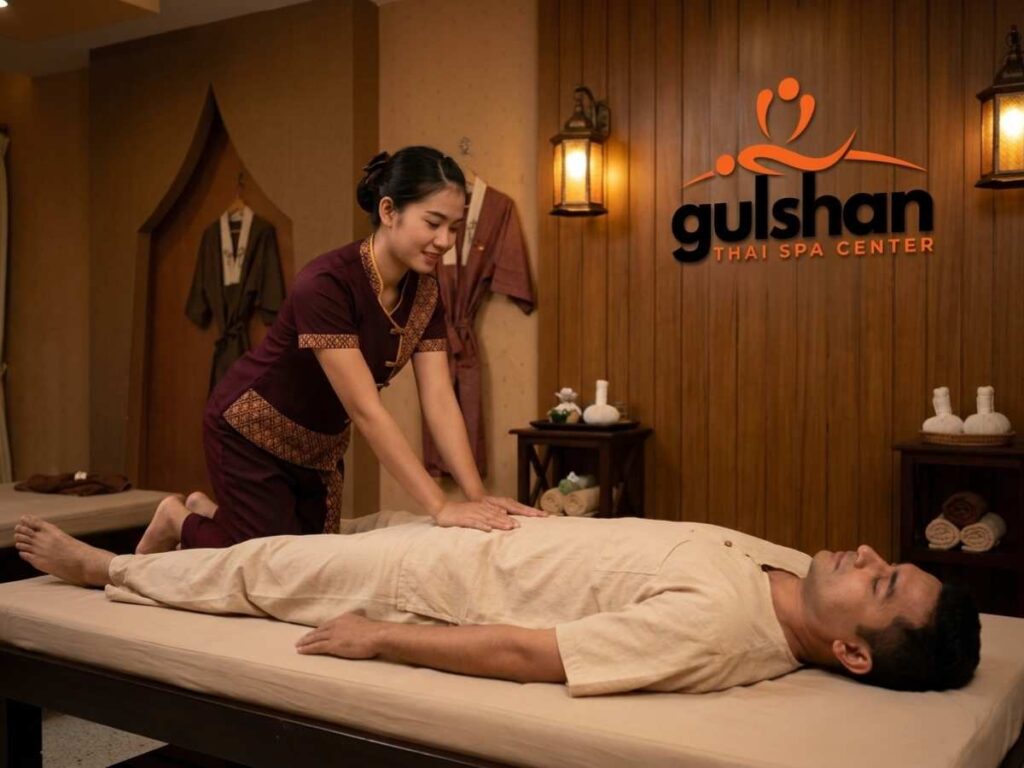
If you are new to massage, Thai massage may feel different from what you expect. Most sessions use no oil, and you stay in loose, comfortable clothes. Instead of long gliding strokes, the therapist presses on your muscles and guides your body through gentle stretches.
This Thai massage guide explains how a session works and what benefits people look for. It also covers who should take extra care and how to choose between Thai massage and other styles. We wrote it for people in Gulshan, Banani and nearby parts of Dhaka who want clear answers before they book.
What Is Thai Massage?
Thai massage is a traditional style of bodywork from Thailand. It combines pressure with guided stretching. You usually stay clothed and lie on a mat, and the therapist normally uses no oil. Many people choose it when they want to feel looser and more flexible.
People sometimes call it “assisted stretching” because the therapist does most of the moving. You breathe and stay relaxed while the therapist places your arms, legs and back into supported positions. Some people compare it to slow yoga with a helper. However, you do not need to be flexible or have any experience to try it.
The pace also sets it apart from many spa massages. Rather than gliding over your skin, the therapist works through your body in a steady rhythm. As a result, the session feels more like a guided workout for your muscles than a quiet rub.
At Gulshan Thai SPA Center, the traditional Thai massage takes place on a mat without oil. It includes guided stretching and pressure-point work.
Why Is Thai Massage So Famous?
Thai massage is famous because it has a long history in Thailand and a style that is easy to recognise. Spas around the world also offer it. Many people enjoy it as well because it feels active and refreshing, unlike a slow, oil-based massage.
Several reasons explain its reputation, and they also show why Thailand is so closely linked with massage:
- A long tradition. Many accounts trace Thai massage back hundreds of years. Families and teachers passed the skills down, and people often link Wat Pho in Bangkok with its traditional teaching.
- Cultural recognition. In 2019, UNESCO added Nuad Thai, the traditional Thai massage, to its list of living cultural traditions.
- A clear style. The mix of steady pressure and stretching sets it apart from other massage types.
- Travel and spa culture. Thailand’s spa scene is well known, so many visitors try Thai massage and recommend it to friends.
- A simple format. Because you stay clothed and no oil is needed, some first-time guests feel more at ease.
Thai Massage Guide: How a Session Works
Thai massage can sound complicated, but the main techniques are easy to understand.
Pressure. The therapist presses slowly along your muscles with palms, thumbs and forearms. Sometimes they use elbows too. Good pressure builds gradually, and it should always stay within your comfort level.
Stretching. Next, the therapist moves your legs, hips, back, shoulders and arms into gentle positions and holds each one for a few breaths. Because the therapist guides every stretch, you never need to force anything.
Rocking and pressing. The therapist also uses steady rocking and pressing movements. These help your body settle into the session.
Gentle joint movement. In addition, the therapist may move areas such as the hips and shoulders in slow, easy circles.
A typical session often follows this pattern, although the order can change:
- You and the therapist talk briefly about your pressure preference and any health concerns.
- Then you change into comfortable clothes, if needed, and lie on the mat.
- The therapist usually starts with your feet and legs.
- Next, they work through your legs, hips, back, arms and shoulders with pressure and stretches.
- Finally, they finish with your neck and shoulders, and you rest for a moment.
Thai massage can feel firm, but it should not hurt. If a stretch or pressure feels like too much, tell your therapist right away. A good therapist will adjust.
Potential Benefits: What to Expect
Experiences differ from person to person, so it helps to think about what Thai massage may offer:
- Less tension. Some people find that it eases tightness in the shoulders, back and hips, especially after long hours at a desk or in traffic.
- A looser feeling. The stretching may leave your body feeling more open and relaxed afterwards.
- Relaxation. The slow rhythm and steady pressure can support general relaxation and a calmer mind.
- A fresh feeling. Many people say they feel lighter or more energetic rather than sleepy, though this varies.
After a session, you may feel relaxed, a little sore, or both. Mild tenderness in stretched areas can happen, particularly if you rarely stretch. Drink water, move gently and rest. However, if you feel sharp pain or the soreness does not fade, contact a healthcare professional.
Keep in mind that massage is a relaxation and wellness service, not medical treatment. It does not cure illnesses or conditions. If you have ongoing or serious pain, talk to a healthcare professional instead of relying on massage alone.
Who May Suit Thai Massage, and Who Should Be Careful
Thai massage may suit you if you:
- Spend long hours sitting and often feel stiff.
- Like an active, stretch-based experience.
- Prefer a session without oil.
- Feel comfortable with firm pressure that the therapist can adjust.
You may prefer another style if you:
- Want quiet, gliding strokes with little movement.
- Dislike being stretched or moved.
- React strongly to firm pressure.
- Want the gentlest possible first massage.
Talk to a doctor first, and tell the center before you book, if you:
- Are pregnant.
- Have had recent surgery, a broken bone or an injury.
- Have weak or brittle bones (osteoporosis).
- Have blood clots, poor blood flow or a serious heart condition.
- Have high blood pressure that your doctor has not brought under control.
- Are having cancer treatment.
- Have a fever, infection or skin condition.
- Have disc problems, nerve pain or ongoing severe pain.
This is general information, not medical advice. Because Thai massage includes stretching, tell the center about any joint, back or movement problems before you start.
Which Thai Massage Is Best? Which Type of Massage Should You Choose?
No single Thai massage or massage type is best for everyone. Instead, ask yourself which style fits your goal: stretching, deeper pressure, quiet relaxation or a gentle touch. First, decide how you want to feel afterwards. Then check the pressure level and session length.
| Style | Typical feel | Often chosen for |
|---|---|---|
| Traditional Thai | Pressure plus guided stretching | Stiffness, flexibility, an active feel |
| Swedish | Long, flowing strokes at lighter pressure | A first massage, general relaxation |
| Deep tissue | Slow, firm, focused pressure | Specific areas of tightness |
| Aromatherapy | Gentle strokes with essential oils | A calm, soft, soothing experience |
If you prefer slow, firm pressure on certain areas, deep tissue massage is usually the closer match. On the other hand, if you want something smooth and easy for a first visit, another option is Swedish massage. Meanwhile, if your main goal is to switch off and feel calm, an aromatherapy massage may suit you better than a stretch-based session.
Some centers also offer a Thai-style session with oil, so ask what they have. For a wider comparison, you can learn more about choosing the right massage technique.
How to Choose a Thai Massage Session
A few simple checks can make your visit more comfortable:
- Decide what you want. Do you want stretching, firm pressure or pure relaxation? Say so when you book.
- Share health details. Tell the center about injuries, pregnancy, medical conditions or sore spots before the session.
- Ask about pressure. Make sure the therapist will adjust to your comfort level.
- Pick a suitable length. The center offers Thai massage in 60-minute and 90-minute sessions. A longer session gives more time for stretching and rest.
- Check privacy and cleanliness. A private room, fresh linen and a calm space matter, especially on your first visit.
- Confirm what to wear. Loose, comfortable clothes are common for Thai massage, but ask what the center provides.
- Book ahead when you can. This helps you get your preferred time, particularly on evenings and weekends.
Also, wear something comfortable, eat lightly beforehand and drink water afterwards.
Thai Massage at Gulshan Thai SPA Center
At Gulshan Thai SPA Center, the traditional Thai session takes place on a mat without oil. It includes guided stretching and pressure-point work. According to the center, the therapist first asks about your preferred pressure and focus areas. As a result, the session matches how your body feels that day. You also get a private room.
If you feel unsure which style suits you, explore the available massage services and ask the team for advice. For a longer read on this style, see our earlier guide to Thai massage in Gulshan.
Gulshan and Banani Locations
Many people who live or work around Gulshan, Banani, Baridhara and Mohakhali want a massage center that is easy to reach after work. The main center sits on Gulshan Avenue, close to Gulshan 1 and Gulshan 2. In addition, the center lists Tejgaon, Badda, Rampura, Uttara and Dhanmondi among the areas it serves. If you travel a long way, book ahead so a room and therapist are ready when you arrive.
If you live closer to Banani, you can visit Gulshan Thai SPA Center – Banani Branch, which also offers Thai massage and other services.
Frequently Asked Questions
It can feel firm, but it should not hurt. If pressure or a stretch feels uncomfortable, tell your therapist so they can adjust.
No. The therapist guides each stretch and stays within your comfortable range.
Thai massage combines pressure with guided stretching, and it usually takes place on a mat without oil. Swedish massage, on the other hand, uses long, flowing strokes, and many people choose it for easy relaxation.
If you are pregnant, recovering from surgery or injury, or living with a bone, heart, blood flow or other medical concern, check with a doctor first. Then tell the center before you book.
That depends on your taste. Swedish and aromatherapy massage often feel calm and gentle. Thai massage, however, suits people who enjoy a more active, stretch-based session.
Gulshan Thai SPA Center has a location on Gulshan Avenue and a Banani branch. You can find contact details below.
Send a WhatsApp message or call the center with your preferred service, date and time. The center lists WhatsApp booking as open 24/7.
Contact and Booking
Gulshan Location
- Address: Shop No. 9, Navana Tower, 45 Gulshan Ave, Dhaka 1212
- Phone: +880 1336-580867
- WhatsApp: wa.me/8801336580867
- Email: support@gulshanthaispacenter.com
- Hours: Daily, 10:00 AM–10:00 PM (WhatsApp booking 24/7)
- Website: https://gulshanthaispacenter.com/
Banani Branch
- Address: Bluemoon Recreation Club, 3rd Floor, Green Deluxe, Plot 67/D, Cross Point Road 11–12, Block E, Banani, Dhaka 1213
- Phone: +880 1329-973889
- WhatsApp: wa.me/8801329973889
- Hours: [10am-10pm] (WhatsApp booking 24/7)
- Website: https://banani.gulshanthaispacenter.com/
If you are still deciding, message the team and describe how you feel and what you want. Then ask which session and length they suggest. Finally, pick the Gulshan or Banani location that is easier for you to reach.


