There’s a moment that happens to almost everyone before their first massage, or even their tenth — a small flicker of uncertainty. Which treatment do I actually need? What’s the difference between deep tissue and Swedish? Will it hurt? What do I even wear? If any of that sounds familiar, take a breath. You’re not overthinking it. You simply want to make a good decision. You’re about to commit your time, your money, and — most importantly — your body to an hour in someone else’s hands.
This guide takes the guesswork out of that decision. We’ll walk through the major massage techniques in plain language. We’ll explain what actually happens during a session, from the moment you arrive to the moment you walk out. And we’ll help you figure out which approach fits your specific needs. No jargon, no overselling — just clear, honest information from people who do this every day.
We’re Gulshan Thai SPA Center, a massage and spa center in Gulshan 2, Dhaka. Over 2,000 clients have rated us 4.9★. Think of this guide as a conversation — the kind we’d have with you in person. Picture sitting down across from us and asking, “Okay, so which massage is actually right for me?”
Why Understanding Massage Techniques Actually Matters
A lot of people approach booking a massage the way they’d order a “surprise me” dish at a restaurant. They just want a massage, any massage, as long as it helps them relax. And honestly, that instinct isn’t wrong. But understanding massage techniques, even at a basic level, changes the entire experience. The reason is simple: different techniques solve different problems.
A Swedish massage and a deep tissue massage might look similar from across the room. Someone lies on a table, a therapist’s hands move across their back. But the goals, pressure, and results are genuinely different. Booking the wrong one isn’t a disaster, but you might walk out feeling like something was missing. Maybe you wanted deep relief for a knot that’s been bothering you for weeks. Instead, you booked a gentle relaxation massage, and that tension is still sitting right there when you leave.
This is also where local, in-person expertise matters more than any online guide, including this one. A trained therapist who’s worked with hundreds of clients in Gulshan, Banani, Baridhara, and across Dhaka knows this city’s tension well. Long commutes, desk jobs, late nights — they’ve seen it all, and they can recommend the right technique on the spot. But knowing the basics yourself means you can have that conversation confidently. You can ask the right questions and feel genuinely informed about what’s about to happen to your own body.
What’s Actually Happening in Your Body During a Massage
It helps to understand, even briefly, why these techniques work at all — because it’s not just about feeling good in the moment.
When a muscle stays tense for an extended period, blood flow to that area can become restricted. This happens from sitting at a desk, gripping a steering wheel in traffic, or simply carrying stress in your shoulders without realizing it. The muscle fibers themselves shorten and stiffen, and that’s what creates the familiar “knot” sensation. Skilled massage technique applies pressure and movement that encourage those tight fibers to release. At the same time, it increases blood flow to the area. This clears out the buildup associated with tension and delivers fresh oxygen to tired tissue.
Touch itself also has a measurable calming effect on the nervous system. Sustained, rhythmic pressure activates the parasympathetic nervous system — your body’s natural “rest and recover” mode. That’s why your heart rate and breathing often slow down noticeably during a session, even without you consciously trying to relax. Different techniques produce different sensations for this reason. Lighter, gliding pressure, like Swedish massage, leans more heavily on this calming nervous-system response. Firmer, targeted pressure, like deep tissue, works more directly on the physical tension held in the muscle itself. Most effective treatments do a bit of both, just in different proportions depending on the technique.
Understanding this distinction is genuinely useful. The “right” massage isn’t a matter of preference alone. It’s about matching the technique to what your body specifically needs that day.
Swedish vs. Deep Tissue Massage: Understanding the Real Difference
These two are the most commonly confused techniques, and for good reason — they can look identical at a glance. Here’s how they’re actually different.
Swedish Massage
Swedish massage is the foundation of most Western relaxation techniques. It uses long, gliding strokes, kneading, and light circular movements, all performed with moderate, comfortable pressure. The goal isn’t to dig into deep muscle tension. It’s to improve circulation, ease everyday stress, and help your nervous system shift out of “high alert” mode.
Best suited for: First-time spa visitors and people dealing with general work-related stress. Also great if you’re looking for relaxation rather than intensive muscle work, or simply want to unwind without intense pressure.
What it feels like: Smooth, flowing, soothing. Many clients describe drifting into a half-sleep state during a Swedish massage — that’s the body responding exactly as it should.
Deep Tissue Massage Therapy
Deep tissue massage works on a different layer entirely — literally. Swedish massage focuses on the surface muscles. Deep tissue massage therapy targets the deeper layers of muscle and the connective tissue, or fascia, surrounding them. Therapists use slower strokes and firmer, more concentrated pressure, often focusing on specific problem areas rather than the whole body evenly.
Best suited for: Chronic tension, old injuries, and muscle stiffness from gym training. Also a good fit for tightness from poor posture, long hours at a desk, or pain that hasn’t responded well to lighter massage techniques.
What it feels like: More intense, sometimes described as “a good kind of uncomfortable” in particularly tight areas, but never sharp or unbearable. A skilled therapist continuously checks in and adjusts pressure based on your feedback throughout the session.
So Which One Should You Choose?
Ask yourself one simple question: Am I looking to relax, or am I looking for relief from a specific, persistent tightness? If it’s the former, Swedish is likely your match. If it’s the latter, deep tissue is probably what your body needs. Think of that knot in your shoulder that’s been there for three weeks. And if you’re not sure, that’s a completely normal place to be. A quick conversation with your therapist during consultation will settle it in under a minute.
Hot Stone Massage Benefits: Why Heat Changes Everything
Hot stone massage adds an element that neither Swedish nor deep tissue massage uses on its own: therapeutic heat. Therapists typically use smooth, flat basalt stones, chosen because they retain heat exceptionally well. They warm the stones to a safe, comfortable temperature. Then they use them alongside traditional massage strokes — sometimes placing them briefly along the spine, sometimes holding them while they work.
The Real Benefits
Faster muscle relaxation. Heat dilates blood vessels, which increases circulation to the area and helps muscles release tension faster than manual pressure alone. A single hot stone session can sometimes achieve a level of muscle relaxation that would otherwise take a longer deep tissue treatment to reach.
Deeper sense of calm. There’s something genuinely different about warmth moving across tense muscles. It signals safety to the nervous system in a way that’s hard to replicate with hands alone. Many clients describe hot stone massage as the most deeply relaxing treatment they’ve tried.
Less discomfort during deeper work. Heat helps muscles relax before pressure even arrives, so hot stone techniques can reach deeper tension with less of the intensity that pure deep tissue work sometimes involves.
Improved circulation. Beyond the massage itself, the heat-driven blood flow can leave skin looking and feeling noticeably refreshed.
Best suited for: Clients with persistent muscle stiffness who find deep tissue massage too intense on its own. Also ideal for anyone dealing with high stress, or simply anyone who wants the most deeply relaxing treatment available.
Aromatherapy Massage Techniques: Where Touch Meets Scent
Aromatherapy massage takes a slightly different approach. It’s built around one idea: scent and touch, combined, create a more complete relaxation response than either one alone.
How It Works
Therapists blend therapeutic-grade essential oils and apply them during a massage that typically uses lighter, flowing strokes similar to Swedish technique. They choose the specific oils based on what you’re looking for: some calm and relieve stress, others ease tension or support better sleep.
Why Scent Matters More Than People Expect
The sense of smell connects directly to the brain’s limbic system, the region responsible for emotion and memory. That’s why a specific scent can shift your mood almost instantly, in a way touch alone struggles to match. Aromatherapy massage uses this connection intentionally. It pairs calming scents with soothing strokes to create a more complete sense of relaxation than a standard massage might offer.
Best suited for: Anyone managing anxiety or work-related stress, or clients dealing with sleep difficulties. Also a great fit if you want a fully immersive, sensory relaxation experience rather than purely physical muscle work.
Shiatsu Massage Explained: The Pressure-Point Approach
Shiatsu is worth understanding even if it’s not the most commonly requested treatment. It represents a genuinely different philosophy of bodywork, one rooted in traditional Japanese healing practices.
What Makes Shiatsu Different
Swedish massage uses gliding strokes. Shiatsu takes a different approach: focused finger, palm, and sometimes elbow pressure applied to specific points along the body. Practitioners believe these points correspond to the body’s energy pathways. The therapist typically works without oils, often through light clothing, using rhythmic, sustained pressure rather than continuous movement.
The Core Idea Behind It
Shiatsu is built around restoring balance and flow throughout the body. It works with pressure points the same way acupuncture works with needles, though Shiatsu uses touch alone. Many clients describe it as feeling distinctly different from Western massage styles. It’s less about kneading muscle, more about steady, grounding pressure that seems to reset the whole body at once.
Worth knowing: Shiatsu shares some philosophical roots with Traditional Thai Massage. Thai massage also incorporates rhythmic compression and pressure-point work alongside stretching. For many in Dhaka, it’s a closely related and more accessible way to experience similar pressure-point benefits.
How Reflexology Can Enhance a Full Body Massage
Reflexology is another technique worth understanding, particularly because of how well it complements a full body massage rather than replacing it.
The Basic Concept
Reflexology rests on a simple idea. Specific points on the feet, and sometimes the hands and ears, correspond to different organs and systems throughout the body. By applying targeted pressure to these points, reflexology aims to promote relaxation and support overall balance — not just in the feet themselves.
Why It Pairs Well with Full Body Massage
On its own, reflexology offers a focused, calming experience. But combine it with — or follow it up with — a full body massage, and the effect deepens. Many clients report an even greater sense of total-body relaxation. The logic makes sense. A full body massage addresses larger muscle groups and overall tension. Reflexology-style foot pressure targets a part of the body that rarely gets dedicated attention. Yet it holds a surprising amount of tension, especially if you’re on your feet most of the day or wearing restrictive footwear during long Dhaka workdays.
Worth knowing: Reflexology is a specialized technique on its own. But two treatments echo many of its grounding, full-body-relaxation benefits: Traditional Thai Massage and Full Body Scrub. Both give dedicated attention to the hands and feet as part of a complete, head-to-toe session.
What Actually Happens During Your Visit: A Calm Walkthrough
Knowing the techniques is useful, but a lot of the nervousness people feel before a massage comes from somewhere else entirely. Especially before their first one, most people simply don’t know what the experience itself will be like. So let’s walk through it, step by step, exactly as it happens.
Arrival
When you arrive at Gulshan Thai SPA Center, there’s no rush. A calm, clean reception area welcomes you, away from the noise and pace of Gulshan’s streets outside. This is intentional — the relaxation part of your visit doesn’t begin on the table, it begins the moment you walk through the door. Take a few minutes here. Settle in. Let your shoulders drop before anything even starts.
Consultation
Before any treatment begins, you’ll have a short, unhurried conversation with your therapist. This isn’t a formality. It’s where the entire session takes shape around you specifically. Your therapist will ask a few simple questions, including:
- Any areas of tension, pain, or tightness you’d like addressed
- Your general pressure preference (lighter and relaxing, or firmer and more targeted)
- Any health conditions, injuries, or sensitivities your therapist should be aware of
- What you’re hoping to feel like afterward — relaxed, recovered, refreshed, or all three
This is also the moment to ask any questions you have, including which technique might suit you best if you’re still unsure between, say, Swedish and deep tissue. There’s no rush here either — a good consultation takes the time it needs to take.
The Treatment Itself
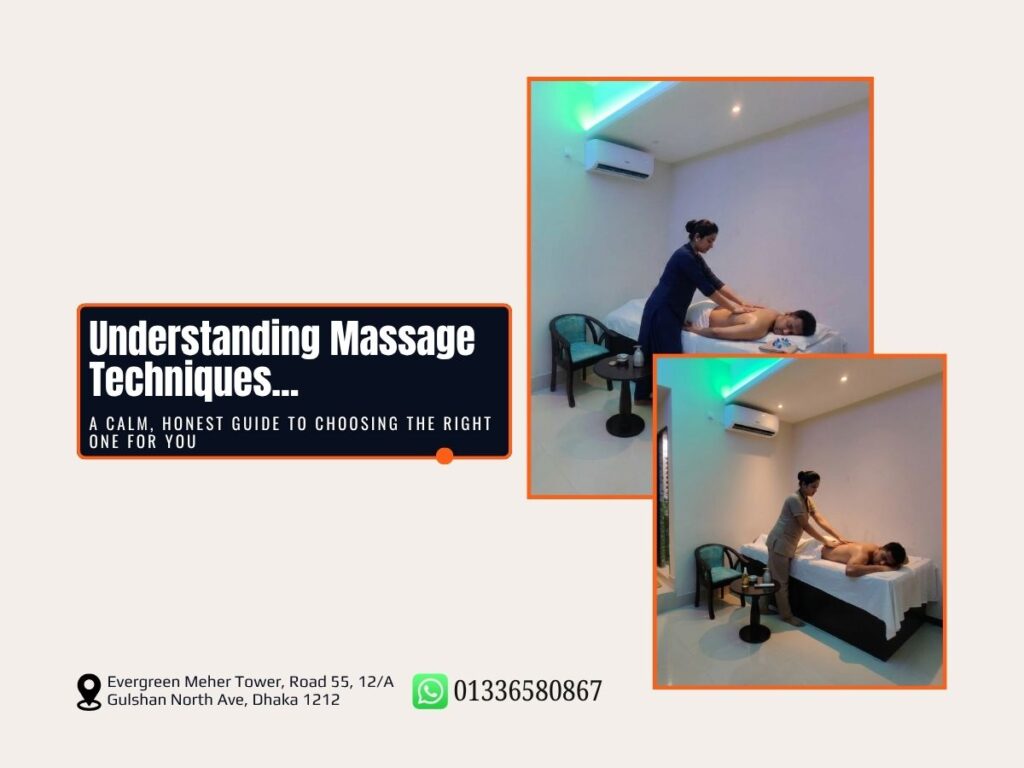
Your therapist shows you to a private, hygienic room, gives you a few quiet moments to get comfortable, and then begins. Throughout the session, you remain in control. If pressure needs adjusting, lighter or firmer, that feedback is always welcome and expected. A skilled therapist constantly reads how your body responds and adjusts accordingly, rather than applying the same pressure mechanically from start to finish.
Depending on the technique, you might notice a few things happen on their own. Your breathing slows. Your mind quiets. A sense of warmth spreads through tense areas as they begin to release. This is normal, and it’s exactly the response the treatment is designed to create.
Afterward
Most clients describe the same general feeling after a session: looser shoulders, slower breathing, a quieter mind. A kind of full-body lightness follows that’s hard to put into words until you’ve felt it yourself. Mild tiredness is common, especially after deep tissue or hot stone treatments. That’s simply your body settling into the relaxation response, not a sign anything went wrong.
We always recommend taking a few quiet minutes before stepping back into the noise of the day. Drink some water. Let yourself transition slowly rather than rushing straight from the table into traffic.
How to Prepare for Your Massage: A Few Simple Tips
A little preparation goes a long way toward making sure your session delivers everything it’s meant to. Here’s what we recommend.
1. Avoid a heavy meal beforehand. Lying face-down or on your side with a full stomach is uncomfortable, and it can distract from the relaxation you’re there for. A light meal an hour or two before your appointment is ideal.
2. Arrive a few minutes early, not rushed. Give yourself time to transition out of “go mode” before your session starts. Walking in straight from a stressful commute means your body needs longer to settle. Arriving early lets that happen before the treatment even begins.
3. Know roughly what you want from the session. You don’t need a detailed plan. A general sense is enough — something like “I want to relax” versus “my lower back has been bothering me for weeks.” That single sentence helps your therapist tailor the session from the very first minute.
A Note on What to Wear
This is one of the most common questions we hear, and the honest answer is simple: wear whatever feels comfortable to travel in. You won’t need to bring anything special. Once you’re in your private room, your therapist gives you clear, simple guidance on what to do, and full draping and privacy protocols stay in place throughout every treatment, regardless of the technique. Most clients undress to their own comfort level — many keep underwear on — and a sheet or towel always covers you except for the specific area your therapist is working on at any given moment. If you’re ever unsure or want a particular adjustment, just ask. It’s a completely normal question, and one we’re happy to answer before your session begins.
Choosing the Right Technique: A Quick Reference
If you’re still deciding which treatment fits your needs, here’s a simple way to think about it.
| If you’re looking for… | Consider… |
|---|---|
| General relaxation and stress relief | Swedish Massage |
| Relief from chronic tension or old injuries | Deep Tissue Massage Therapy |
| Deep relaxation with added warmth | Hot Stone Massage |
| A calming, sensory full-body experience | Aromatherapy Massage |
| Traditional stretching and pressure-point work | Traditional Thai Massage |
| A fuller, broader-pressure technique for major muscle groups | Body to Body (B2B) Massage |
| Smooth, refreshed skin alongside relaxation | Full Body Scrub |
If more than one of these sounds appealing, that’s completely fine. Many clients combine treatments. Others simply describe what they’re feeling to their therapist and let their expertise guide the final recommendation.
A Few Common Scenarios
Sometimes it’s easier to recognize yourself in a situation than in a list of techniques. Here are a few examples we hear often.
“I sit at a desk all day and my shoulders are constantly tight.” This is one of the most common profiles we see, especially from clients working in Gulshan and Banani’s office districts. Deep tissue massage tends to bring the most noticeable relief here. So does Traditional Thai Massage, with its added stretching component. The tension in this profile usually sits deep in the upper back and neck.
“I just need to switch my brain off for an hour.” If stress, not physical pain, is the main issue, start with Swedish massage or Aromatherapy massage. Both are built around calming the nervous system rather than targeting specific muscle tightness.
“I’ve tried massage before but it didn’t really help.” This often means the technique didn’t match the issue. Maybe a gentle relaxation massage tried to address what was actually deep, chronic tension. A clear consultation, and possibly a switch to deep tissue or hot stone massage, often makes a noticeable difference the second time around.
“I’m on my feet all day and my whole body feels worn down.” Traditional Thai Massage and Full Body Scrub both give dedicated attention to the hands and feet. A full body treatment like these tends to address this kind of head-to-toe fatigue more completely than a back-only session would.
If you recognize yourself in any of these, you already have a good starting point for your next conversation with your therapist.
Why Choose Gulshan Thai SPA Center to Experience These Techniques
Understanding massage techniques in theory is one thing. Experiencing them done well, by someone genuinely trained in the craft, is another entirely. Here’s what sets a session at Gulshan Thai SPA Center apart.
Certified, experienced therapists. Our team trains specifically across each technique we offer: Traditional Thai Massage, Body to Body (B2B) Massage, Aromatherapy Massage, Swedish Massage, Deep Tissue Massage Therapy, Full Body Scrub, and Hot Stone Massage. Not a single generic approach applied to everyone.
Private, hygienic rooms for every client, every session, without exception.
A genuine consultation process, so the technique you receive is actually matched to what your body needs that day.
Local convenience, based in Gulshan 2, easily reached from Gulshan 1, Banani, Baridhara, Uttara, and Dhanmondi.
Transparent pricing, with no hidden charges or mid-session upselling.
Open daily, 10:00 AM to 10:00 PM, with booking available 24/7 and walk-ins always welcome.
A welcoming first visit, with 25% off for new clients.
We’re rated 4.9★ by more than 2,000 clients. Not because we offer the most treatments. Because every treatment we offer is delivered properly, by people who understand the technique they’re performing and why it matters for you specifically.
Frequently Asked Questions
Swedish massage uses lighter, flowing strokes designed for general relaxation and stress relief. Deep tissue massage applies firmer, more targeted pressure to reach deeper muscle layers. This makes it better suited for chronic tension, old injuries, or persistent muscle stiffness.
Hot stone massage uses heated stones to increase circulation and help muscles relax more quickly than manual pressure alone. Benefits include faster tension release, deeper relaxation, reduced discomfort during deeper muscle work, and improved circulation overall.
Deep tissue massage involves firmer, more concentrated pressure than relaxation-focused techniques. This can feel intense in particularly tight areas, but it should never be sharply painful. A skilled therapist continuously adjusts pressure based on your feedback throughout the session.
You can wear whatever’s comfortable to travel in. Once in your private room, you’ll undress to your own comfort level. A sheet or towel keeps you covered throughout the session except for the specific area your therapist is treating at any given time.
The simplest approach is to think about your goal. General relaxation points toward Swedish massage, while chronic tension or specific pain points toward deep tissue. A short consultation with your therapist before the session is the easiest way to get a precise recommendation matched to your body’s actual needs.
Ready to Experience It for Yourself?
Reading about massage techniques can only take you so far. The real understanding comes from feeling the difference in person. Are you in Gulshan, Banani, Baridhara, Uttara, or Dhanmondi and ready to find the technique that’s right for you? We’re here, with certified therapists and a calm, private space designed for exactly that.
Gulshan Thai SPA Center 📍 Gulshan 2, Dhaka — serving Gulshan 1, Gulshan 2, Banani, Baridhara, Uttara, Dhanmondi & all of Dhaka 🕙 Open Daily: 10:00 AM – 10:00 PM | Online booking available 24/7 📞 Call or WhatsApp: 01336-580867 🌐 gulshanthaispacenter.com ⭐ 4.9/5 from 2,000+ clients 🎁 New clients: 25% off your first visit


